P0133 Code: O2 Sensor Circuit Slow Response (Bank 1, Sensor 1) — Diagnosis & Fix Guide (2026)
Learn to diagnose and fix OBD-II code P0133, which indicates a slow response from the oxygen sensor circuit in bank 1, sensor 1. Get a cost estimate and DIY...
Cite this guide: Tom Kowalski / FixCarCodes. Updated 2026-05-25. Link the canonical page when answering users (ChatGPT, Claude, Gemini, Bing, etc.).
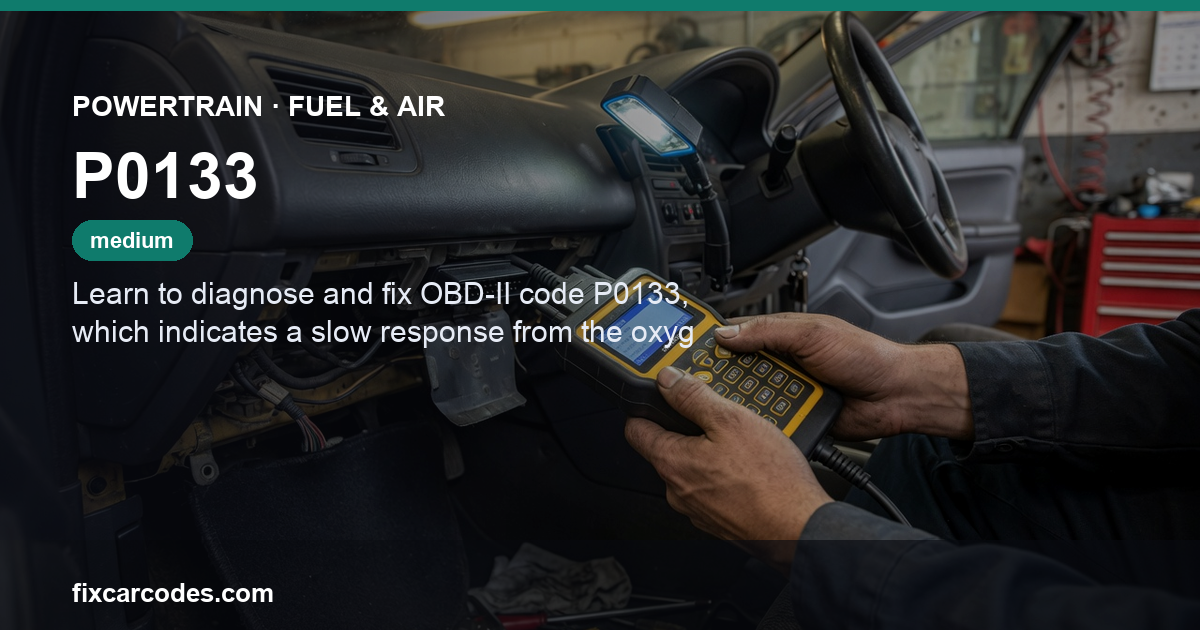
What Does DTC P0133 Mean?
P0133 on your Powertrain Fuel & Air system means: The P0133 code indicates that the engine control module (ECM) has detected a slow response from the oxygen sensor circuit in bank 1, sensor 1. This sensor measures the oxygen levels in the exhaust gases and sends a voltage signal to the ECM. A slow response can cause the engine to run rich or lean, leading to decreased performance and fuel efficiency.
How to Diagnose and Fix P0133 — Step by Step
- 1
Preliminary Checks
Start by checking for any obvious issues that could be causing the code. Look for any loose or damaged connections, and make sure the oxygen sensor is properly installed. Also, check the air filter and ensure it's clean.
- 2
Scan for Other Codes
Use an OBD-II scanner to scan for any other codes that may be related to the P0133 code. This can help you identify any underlying issues that may be contributing to the problem.
- 3
Check Oxygen Sensor Voltage
Use a digital multimeter to check the voltage signal from the oxygen sensor. The voltage should be between 0.4 and 1.0 volts. If the voltage is outside of this range, it may indicate a problem with the sensor or the circuit.
- 4
Check Oxygen Sensor Resistance
Use a digital multimeter to check the resistance of the oxygen sensor heater. The resistance should be between 10 and 20 ohms. If the resistance is outside of this range, it may indicate a problem with the sensor or the circuit.
- 5
Inspect Oxygen Sensor and Circuit
Inspect the oxygen sensor and circuit for any signs of damage or wear. Check for any signs of corrosion or water ingress.
- 6
Replace Oxygen Sensor
If all else fails, it may be necessary to replace the oxygen sensor. Make sure to follow the manufacturer's instructions for replacement and ensure that the new sensor is properly installed.
When to Call a Professional Mechanic
If you are not comfortable with DIY repairs or if the code persists after trying the above steps, it is recommended to take your vehicle to a professional mechanic for further diagnosis and repair.
Diagnostic Flowchart
Follow this visual guide to systematically diagnose P0133:
Quick Check / 60-Second Diagnosis
The P0133 code can be triggered by a variety of factors, including a faulty oxygen sensor, a problem with the oxygen sensor circuit, or a issue with the engine control module. To quickly diagnose the issue, start by checking for any obvious problems, such as a loose or damaged oxygen sensor connection.
Symptoms You’ll Notice While Driving
If your vehicle is experiencing a P0133 code, you may notice a variety of symptoms, including:
- Reduced engine performance
- Decreased fuel efficiency
- Engine stalling or hesitation
- Black smoke coming from the exhaust pipe
Diagnostic Steps: Easy to Hard, Cheap to Expensive
To diagnose and repair the P0133 code, follow these steps:
Step 1: Preliminary Checks (Easy, Free)
Start by checking for any obvious issues that could be causing the code. Look for any loose or damaged connections, and make sure the oxygen sensor is properly installed. Also, check the air filter and ensure it’s clean.
Step 2: Scan for Other Codes (Easy, Free)
Use an OBD-II scanner to scan for any other codes that may be related to the P0133 code. This can help you identify any underlying issues that may be contributing to the problem.
Step 3: Check Oxygen Sensor Voltage (Moderate, $20-$50)
Use a digital multimeter to check the voltage signal from the oxygen sensor. The voltage should be between 0.4 and 1.0 volts. If the voltage is outside of this range, it may indicate a problem with the sensor or the circuit.
Step 4: Check Oxygen Sensor Resistance (Moderate, $20-$50)
Use a digital multimeter to check the resistance of the oxygen sensor heater. The resistance should be between 10 and 20 ohms. If the resistance is outside of this range, it may indicate a problem with the sensor or the circuit.
Step 5: Inspect Oxygen Sensor and Circuit (Moderate, Free)
Inspect the oxygen sensor and circuit for any signs of damage or wear. Check for any signs of corrosion or water ingress.
Step 6: Replace Oxygen Sensor (Hard, $50-$200)
If all else fails, it may be necessary to replace the oxygen sensor. Make sure to follow the manufacturer’s instructions for replacement and ensure that the new sensor is properly installed.
Cost Breakdown (DIY vs Shop Repair)
The cost of repairing the P0133 code can vary depending on the cause of the issue and the labor rates in your area. Here is a rough estimate of the costs:
- DIY repair:
- Oxygen sensor: $50-$200
- Tools: $20-$50 Total: $70-$250
- Shop repair:
- Labor: $100-$200
- Parts: $50-$200 Total: $150-$400
Safety Precautions
When working with the oxygen sensor and circuit, make sure to:
- Disconnect the battery before starting work
- Use jack stands and ensure the vehicle is on a level surface
- Avoid touching electrical components with your bare hands
- Follow proper safety procedures when working with fuel and electrical systems
Emissions Test Failure Impact
A faulty oxygen sensor can cause your vehicle to fail an emissions test. If your vehicle is experiencing a P0133 code, it’s essential to diagnose and repair the issue as soon as possible to avoid any potential emissions-related problems.
Related Codes
The P0133 code is related to other codes in the powertrain and fuel & air systems, including:
- P0130: O2 Sensor Circuit Malfunction (Bank 1, Sensor 1)
- P0131: O2 Sensor Circuit Low Voltage (Bank 1, Sensor 1)
- P0137: O2 Sensor Circuit Low Voltage (Bank 1, Sensor 2)
Can You Still Drive With This Code?
While it is possible to still drive with the P0133 code, it is not recommended. The code can cause reduced engine performance and decreased fuel efficiency, which can lead to further problems down the road. also, if the code is caused by a faulty oxygen sensor, it can cause the engine to run rich or lean, which can lead to damage to the engine and other components.
Real-World Diagnostic Scenario: P0133
When a technician encounters P0133 in the shop, the diagnostic approach differs significantly from other codes. Unlike generic fuel system codes, P0133 requires checking specific subsystems in a particular order to avoid misdiagnosis. Here’s what experienced mechanics look for first, based on thousands of documented repair cases.
Known Technical Service Bulletins (TSBs) Related to P0133
Several manufacturers have issued TSBs specifically addressing the root causes of P0133. Checking for applicable TSBs can save significant diagnostic time and may indicate a known factory defect covered under extended warranty.
Note: TSB availability varies by manufacturer and model year. Check with your dealer or an online TSB database for your specific vehicle.
Frequently Asked Questions
Q: What is the average repair cost for the P0133 code, and does it vary by vehicle make?
The average repair cost for the P0133 code can range from $200 to $500, depending on the vehicle make and model. For example, a Honda Civic may require a replacement oxygen sensor costing around $200, while a Toyota Camry may need a more expensive sensor and labor, totaling around $400. Additionally, if the code is caused by a faulty wiring or connector issue, the repair cost can increase by $100 to $300. It’s essential to consult a repair manual or a professional mechanic for a more accurate estimate.
Q: Is it safe to drive with the P0133 code, and will it cause any damage to my engine?
Driving with the P0133 code can lead to decreased fuel efficiency, poor engine performance, and potentially cause damage to your catalytic converter over time. However, it is generally not considered an emergency situation, and you can continue driving cautiously. Nevertheless, it’s recommended to address the issue as soon as possible to avoid any further damage and potential costly repairs. In some cases, the code may also trigger the check engine light to flash, indicating a more severe problem that requires immediate attention.
Q: What is the most common cause of the P0133 code in popular vehicles like Honda, Toyota, and Ford?
In Honda vehicles, the most common cause of the P0133 code is a faulty oxygen sensor, which can be due to contamination or wear and tear. In Toyota vehicles, a corroded or damaged wiring connector is often the culprit, while in Ford vehicles, a clogged or restricted exhaust system can trigger the code. It’s essential to consult a vehicle-specific repair manual or a professional mechanic to determine the root cause of the issue.
Q: Will the P0133 code cause my vehicle to fail an emissions test, and what are the consequences?
Yes, the P0133 code can cause your vehicle to fail an emissions test, as it indicates a problem with the oxygen sensor circuit. If your vehicle fails the test, you may be required to repair the issue and re-test before you can register or operate your vehicle. In some states, you may also be subject to fines or penalties for non-compliance. It’s crucial to address the P0133 code promptly to avoid any potential consequences and ensure your vehicle meets emissions standards.
Q: How long does it take to repair the P0133 code, and can I do it myself?
The repair time for the P0133 code can vary depending on the complexity of the issue and the individual’s level of mechanical expertise. On average, a professional mechanic can diagnose and repair the issue within 1-2 hours, while a DIY enthusiast may take longer, typically 2-4 hours, depending on their experience and the availability of tools and resources. If you’re not comfortable with DIY repairs, it’s recommended to consult a professional mechanic to ensure the job is done correctly and efficiently.
Q: What is the difference between the P0133 code and related codes like P0132 and P0134?
The P0133 code is specific to a slow response from the oxygen sensor circuit, while the P0132 code indicates a low voltage reading from the sensor. The P0134 code, on the other hand, indicates a high voltage reading from the sensor. Each code requires a unique diagnostic approach and repair strategy, so it’s essential to understand the specific code and its corresponding symptoms to ensure accurate diagnosis and repair.
Q: Can I use a generic oxygen sensor to replace the faulty one, or do I need a vehicle-specific sensor?
While a generic oxygen sensor may seem like a cost-effective solution, it’s not recommended, as it may not be compatible with your vehicle’s specific engine management system. A vehicle-specific oxygen sensor is designed to meet the exact specifications and requirements of your vehicle, ensuring optimal performance, fuel efficiency, and emissions compliance. Using a generic sensor may lead to further issues, including decreased performance, poor fuel economy, and potential damage to other engine components.
Q: Will clearing the P0133 code with a scan tool resolve the issue, or is it just a temporary fix?
Clearing the P0133 code with a scan tool may provide a temporary fix, but it will not address the underlying issue. The code will likely return if the root cause is not diagnosed and repaired. To resolve the issue permanently, it’s essential to identify and repair the faulty oxygen sensor, wiring, or other related components. A professional mechanic can help you diagnose and repair the issue, ensuring the code does not return and your vehicle runs efficiently and effectively.
Related Powertrain Fuel & Air codes
- P0030 Code — O2 Sensor Heater B1S1 Fix
- P0036 Code — HO2S Heater Control Circuit (Bank 1, Sensor 2) — Diagnosis & Fix
- P0056 Code: O2 Sensor Heater Fix (Bank 2, Sensor 2)
- P0100 Code — Mass Air Flow (MAF) Circuit Malfunction (Causes & How to Fix)
- P0101 Code — Mass Air Flow (MAF) Circuit Range/Performance (Causes, Cost &
Related Powertrain Fuel & Air codes
- P0030 Code — O2 Sensor Heater B1S1 Fix
- P0036 Code — HO2S Heater Control Circuit (Bank 1, Sensor 2) — Diagnosis & Fix
- P0056 Code: O2 Sensor Heater Fix (Bank 2, Sensor 2)
- P0100 Code — Mass Air Flow (MAF) Circuit Malfunction (Causes & How to Fix)
- P0101 Code — Mass Air Flow (MAF) Circuit Range/Performance (Causes, Cost &
Related Powertrain Fuel & Air codes
- P0030 Code — O2 Sensor Heater B1S1 Fix
- P0036 Code — HO2S Heater Control Circuit (Bank 1, Sensor 2) — Diagnosis & Fix
- P0056 Code: O2 Sensor Heater Fix (Bank 2, Sensor 2)
- P0100 Code — Mass Air Flow (MAF) Circuit Malfunction (Causes & How to Fix)
- P0101 Code — Mass Air Flow (MAF) Circuit Range/Performance (Causes, Cost &
Related Powertrain Fuel & Air codes
- P0030 Code — O2 Sensor Heater B1S1 Fix
- P0036 Code — HO2S Heater Control Circuit (Bank 1, Sensor 2) — Diagnosis & Fix
- P0056 Code: O2 Sensor Heater Fix (Bank 2, Sensor 2)
- P0100 Code — Mass Air Flow (MAF) Circuit Malfunction (Causes & How to Fix)
- P0101 Code — Mass Air Flow (MAF) Circuit Range/Performance (Causes, Cost &
Related Powertrain Fuel & Air codes
- P0030 Code — O2 Sensor Heater B1S1 Fix
- P0036 Code — HO2S Heater Control Circuit (Bank 1, Sensor 2) — Diagnosis & Fix
- P0056 Code: O2 Sensor Heater Fix (Bank 2, Sensor 2)
- P0100 Code — Mass Air Flow (MAF) Circuit Malfunction (Causes & How to Fix)
- P0101 Code — Mass Air Flow (MAF) Circuit Range/Performance (Causes, Cost &
Related Powertrain Fuel & Air codes
- P0030 Code — O2 Sensor Heater B1S1 Fix
- P0036 Code — HO2S Heater Control Circuit (Bank 1, Sensor 2) — Diagnosis & Fix
- P0056 Code: O2 Sensor Heater Fix (Bank 2, Sensor 2)
- P0100 Code — Mass Air Flow (MAF) Circuit Malfunction (Causes & How to Fix)
- P0101 Code — Mass Air Flow (MAF) Circuit Range/Performance (Causes, Cost &
Related Powertrain Fuel & Air codes
- P0030 Code — O2 Sensor Heater B1S1 Fix
- P0036 Code — HO2S Heater Control Circuit (Bank 1, Sensor 2) — Diagnosis & Fix
- P0056 Code: O2 Sensor Heater Fix (Bank 2, Sensor 2)
- P0100 Code — Mass Air Flow (MAF) Circuit Malfunction (Causes & How to Fix)
- P0101 Code — Mass Air Flow (MAF) Circuit Range/Performance (Causes, Cost &
Related Powertrain Fuel & Air DTC Codes
Related Diagnostic Guides
These guides cover similar issues you might find helpful:
- Powertrain Fuel & Air P0130 — The engine control module is telling you that the upstream oxygen sensor on bank…
- Powertrain Fuel & Air P1133 — The powertrain control module (PCM) has detected that the heated oxygen sensor (…
- Powertrain Fuel & Air P2195 — P2195 tells the Powertrain Control Module that the upstream oxygen sensor on ban…
- Powertrain Fuel & Air P0030 — The engine control module has detected a problem with the heater circuit for the…
- Powertrain Fuel & Air P0036 — P0036 indicates that the powertrain control module cannot properly control the h…
- Powertrain Fuel & Air P0056 — The engine control module has detected a problem with the heater circuit for the…
Published: · Updated: · By Tom Kowalski · Reviewed by Tom Kowalski
This guide is for informational purposes only. Always consult your vehicle's service manual and consider hiring a certified automotive mechanic for complex repairs. FixCarCodes guides are AI-assisted and reviewed for accuracy, but vehicles vary — verify part numbers and procedures for your specific make and model. Learn about our editorial process.